
Seattle RV Rental Guide: How to Choose & What It’ll Cost
The best RV to rent in Seattle depends on your destination’s size restrictions, how long you’ll be roadtripping, your group’s travel preferences and budget.
Here’s how to decide which RV fits your vacation best, what a Seattle RV rental costs, and what to confirm before you book.
The short version:
Where are you headed? Some popular destinations limit RV sizes on roads and in campgrounds.
How long is your trip? Most renters want more space and extra comfort on vacations 1-week or longer.
Who’s traveling with you? Will you and your traveling companions be able to relax in a compact space, or will you prefer a bigger living area, full kitchen, and full bathroom?
Compare Seattle RV rental companies: See the pros and cons of national chains, peer-to-peer rental sites, and local rental companies
Budget your trip cost: A 5-night trip for two runs roughly $1,700 to $3,000, depending on the RV you choose and what the rate includes.
Where Are You Headed?
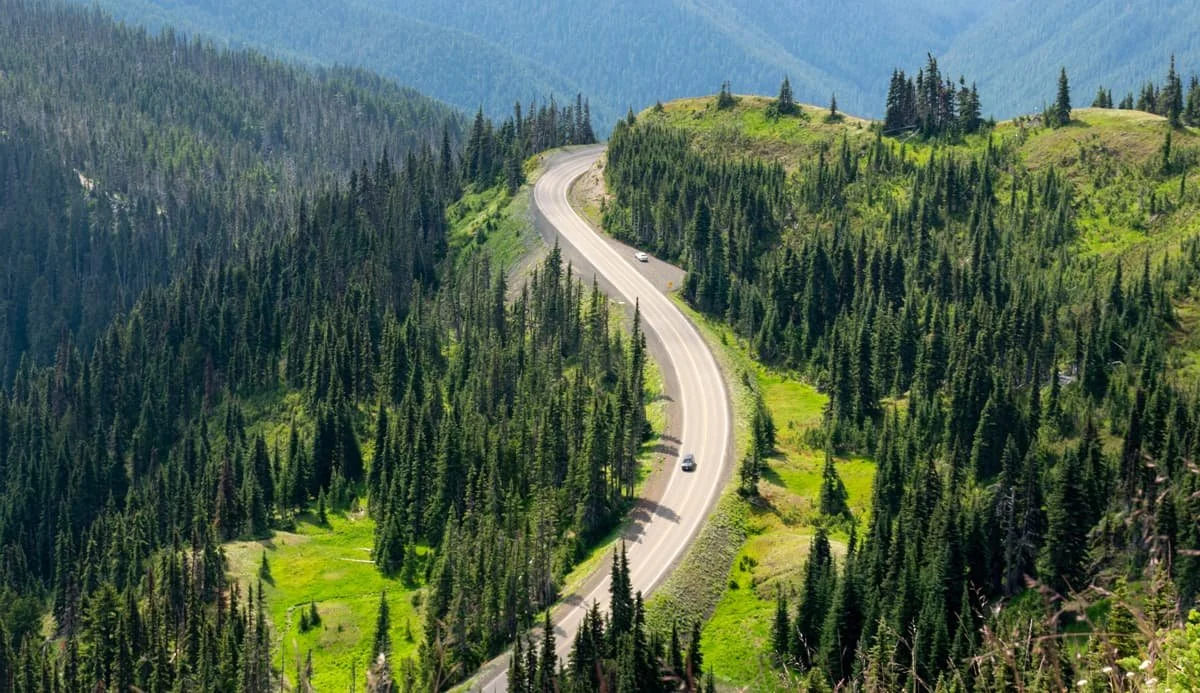
Hurricane Ridge in Olympic National Park
Renting an RV in Seattle lets you access national parks within a half-day drive: Olympic, Mount Rainier, North Cascades, and the San Juan Islands. You can also follow the Pacific Coast Highway south, cross into Canada to visit Vancouver and Whistler, or drive inland to the Columbia River Gorge and Washington Wine Country.
Knowing your vacation destinations can help you select the right sized RV.
Olympic National Park
Olympic’s Upper Hoh Road narrows as it heads toward the rainforest, and most sites at Hoh Campground top out around 21 feet, so a smaller vehicle gives you the most access and easier parking. The Solis PX is the best fit, though the EKKO and View work well too.
One thing to confirm before you plan around the Hoh: the Upper Hoh Road is maintained by Jefferson County and is the only way to the Hoh Rain Forest. It has been closed repeatedly by flood washouts in recent years, so check current status on the park’s road conditions page before you build a trip around it. The rest of the Peninsula (Lake Crescent, Sol Duc, Rialto and Ruby beaches, Hurricane Ridge, Kalaloch) stays accessible regardless.
Mount Rainier National Park
Mount Rainier’s roads are steep, winding, and narrow, and the campgrounds are sized accordingly (Cougar Rock tops out at 35 feet, Ohanapecosh at 32). Stevens Canyon Road and the climb to Paradise are easier to drive in a shorter vehicle.
In addition to the Solis PX, the EKKO, View, and Sunflyer all handle the park’s roads comfortably.
San Juan Islands and Whidbey Island
You’ll take a ferry to reach these islands, and Washington State Ferries price by vehicle length and height. Blacksford’s Solis PX is the money-saver here: at 21 feet it’s under the 22-foot cutoff and pays the standard rate with no height penalty.
Most other RVs are 22 feet or longer and tall enough to land in the over-height bracket, where the fare runs close to double. (Width can double a fare too, but only above 8 feet 6 inches, and typical RV rentals are 8 feet 5 inches or less.) Any of them can make the trip, but the Solis PX is the cheapest to bring aboard.
Two ferry routes use a vehicle reservation system, Anacortes to the San Juan Islands and Port Townsend to Coupeville, and summer slots fill fast, so book your outbound and return trips early.
North Cascades National Park
North Cascades has some winding roads around Washington Pass and Diablo Lake that are easier in a smaller vehicle, though it isn’t strictly necessary. Anything up to a small Class C (the Solis PX, EKKO, View, Sunflyer, or Nexus Triumph 24TS) drives the highway comfortably.
Note that the North Cascades Highway (SR 20) is a seasonal road; see the national parks SR 20 page for closure timing.
Columbia River Gorge & Yakima Valley Wine Country
Take advantage of the wider roads and larger campsites in these areas with a larger RV rental — most models work well. The main routes, I-84 on the Oregon side and SR 14 on the Washington side, carry big rigs without trouble, the wine country and Gorge towns have RV parks with full hookups, and the campsites tend to be longer pull-throughs that fit a slide-out.
Longer rigs, slide-outs, and electric awnings (on models like the Triumph 29T) give your group more room to spread out, inside and at camp. The one road to watch is the Historic Columbia River Highway scenic loop, which caps vehicles at 35 feet; every Blacksford RV is under that, so even the largest models can drive it, and bigger rigs elsewhere simply use I-84.
Vancouver or Whistler Canada
You’ll reach Vancouver and Whistler by driving north on I-5 across the border, so no ferry is required. The right size depends on how much time you spend in the city. The Sea-to-Sky Highway (Highway 99) handles most RVs comfortably. Vancouver itself is a dense city where tight streets and limited parking favor a smaller, van-style RV like the Solis PX or EKKO.
If you’re mainly heading up to Whistler to camp, any size works on the highway. Whistler is a resort town rather than a park, so plan to stay at RV parks along the corridor near Squamish, Whistler, or Pemberton, since in-village RV parking is limited.
Remember: You’ll need a passport to enter Canada and return to the US. Be sure your company’s insurance allows their RVs to travel in Canada.
How Long Will Your Trip Be?
A weekend in a compact camper van feels like a fun adventure but ten days in the same camper van with four people can start to feel cramped. Here’s how to think about your trip length and RV size.
A Long Weekend (3–4 nights)
Almost any RV size works for a long weekend since you won't be in it long enough for the smaller kitchen or convertible bed to feel tight. Packing well and carefully planning your supplies is important with smaller RVS or camper vans, as is using camp chairs or picnic areas to spend time outside the RV.
Our customers’ choice for long weekends: the Solis PX.
A Full Week (5–7 nights)
Comfort starts to matter more as your trip gets closer to one week. A real bed you don't have to convert each night, enough counter space to cook two meals a day, and a wet bath instead of a campground shower all become more valuable.
Our customers’ choice for weeklong trips: small Class Cs like the View, EKKO or Sunflyer.
10 Days or More
Any trip over a week is when a larger vehicle starts to make sense. Water tanks empty faster, grocery runs happen more, and laundry becomes necessary. A larger Class C with a slide-out, a full bathroom, and more storage gives you space to stretch out.
Watch your fuel budget too: Washington has some of the highest gas prices in the country, and a 30-foot motorhome can use twice the fuel of a 21-foot camper van on the same trip.
Our customers’ choice for 10+ day trips: the View, Sunflyer, or Quantum.
Who’s Traveling With You?
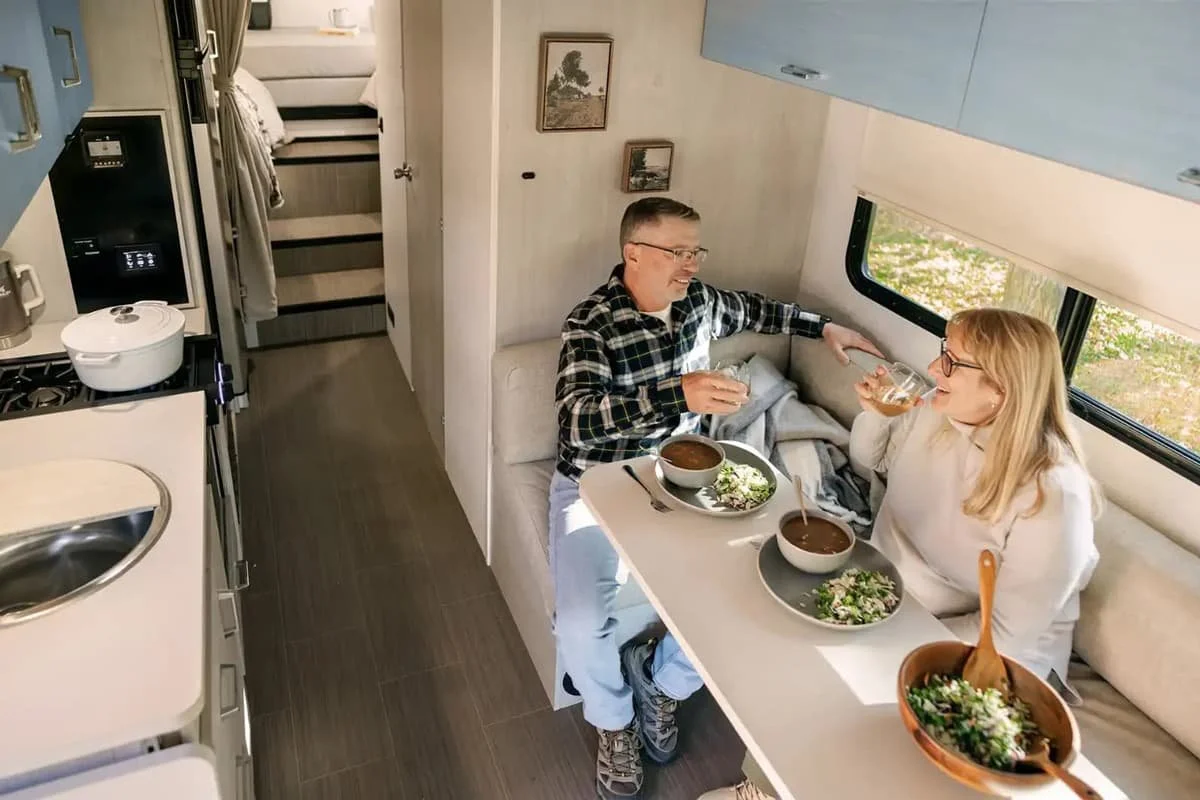
If you’re vacationing solo, you get to decide which amenities and comfort level is right for your trip. But if you have traveling companions, you’ll want to consider your group’s needs.
Couples and pairs celebrating anniversaries, parent-child trips, or a friends’ long weekend usually rent a smaller campervan like the Solis PX. It drives like a large SUV, parks in a regular space, and fits on ferries at or near standard rates. Some families with kids also opt for the convenience of the Solis PX’s pop-top sleeping area, which children love.
Families with kids vacationing during summertime, school breaks, or multi-generational trips usually rent a small Class C like the View or Sunflyer. Real beds, a separate toilet and shower, and sleeping space for four or five make a week on the road more comfortable and worth the trade-off of having a larger vehicle.
Groups of six or more traveling for reunions, milestone trips, or checking off bucket list destinations usually rent the Quantum or Triumph 29T. Both have sleeping and living space for 7 or 8, though they’re better suited for areas like Washington’s wine country with wider roads and larger campsites.
Which Rental Company Do You Prefer?
Several RV rental companies operate in Seattle, and they differ enough that the nightly/daily rate isn't the only thing to compare.
Be sure to check what's included in the rate (things like mileage, generator use, linens, kitchen gear are often extra), your pickup location and times, and what kind of support you get if something goes wrong on the road.
Blacksford RV Rentals
Address: 22505 Pacific Hwy S, Des Moines, WA - 12 minutes south of Seattle-Tacoma International Airport, with free airport pickup and drop-off
RV Fleet: New Winnebago Solis PX and Sunflyer 24GG; Nexus Triumph 29T. The Seattle location opened in 2026, and the fleet will add more models over time.
Inclusions: Unlimited mileage, unlimited generator use, comprehensive and liability insurance, bedding, kitchen gear, camp chairs, complimentary SEA pickup and drop-off, and 24/7 on-trip support
Why customers choose them: All-in pricing without add-on fees, premium new vehicles, in-person orientation with the local team, and support staffed by people who know the specific RV you're driving. Every model has a kitchen, toilet, shower, generator, and house AC.
Drawbacks: Rates run higher than older fleets, though customers find the unlimited generator use and mileage, included gear, and 24/7 customer service a tremendous overall value.
Road Bear RV & El Monte RV (owned by the same company)
Address: 1541 S 96th St, SeaTac, WA (8 miles from SEA); open Saturday mornings, closed Sunday
RV Fleet: Class C motorhomes from 21 to 30 feet, in four sizes
Inclusions: Insurance and taxes included; bedding and kitchen items cost extra; mileage and generator use are typically extra. Complimentary airport shuttle on arrival.
Why customers choose them: Brand-name Class C inventory, a range of sizes, and an airport shuttle.
Drawbacks: Older RVs, service that varies by location, and add-on costs that add up.
Cruise America
Address: 12201 WA-99, Everett, WA (about 40 miles north of SEA, 45–60 minutes depending on traffic)
RV Fleet: Older Class C motorhomes in three sizes (compact, standard, and large)
Inclusions: The vehicle and a limited mileage allowance, with a per-mile fee beyond it; generator hours, prep fees, bedding, and kitchen items are billed separately
Why customers choose them: Low nightly rates and the option to do a one-way trip between cities, which is easier given their many locations.
Drawbacks: The budget option, with older vehicles and few amenities. Customers report occasional reservation problems and frequent add-on charges.
RVshare and Outdoorsy
Address: Online peer-to-peer marketplace (RVshare.com and outdoorsy.com; pickup varies by owner (some deliver, some require home pickup)
RV Fleet: Everything from pop-up trailers to luxury motorhomes; condition and age vary by listing (check reviews and look for SuperHosts)
Inclusions: Set by each owner; some include linens and kitchen gear, many don’t
Why customers choose them: Biggest variety of vehicles and often the lowest nightly rate on the right listing. Great hosts can provide advice on local attractions, etc.
Drawbacks: Last-minute cancellations happen regularly since most hosts do not have replacement RVs if theirs breaks. Photos often don’t reflect the actual RV. Quality of linen and kitchen equipment as well as hygiene standards can vary greatly.
How Much Does it Cost to Rent an RV in Seattle?
Here’s what a 5-night Olympic Peninsula loop typically costs for two travelers renting a Winnebago Solis PX.
| Item | Estimate |
|---|---|
| 5-night Winnebago Solis PX rental | $1,100 to $1,500 |
| Insurance | $70 to $300 |
| Mileage over included allowance (Blacksford includes unlimited mileage) | $0 to $250 |
| Bedding and kitchen gear | $50 to $150 |
| Rideshare from SEA to rental location and back (Blacksford includes free airport pickup and drop-off) | $50 to $100 |
| Fuel for about 400 miles | $125 to $175 |
| Campground fees, including a mix of national park and private RV park stays | $120 to $200 |
| Edmonds-Kingston ferry round trip | $50 to $70 |
| Olympic National Park entrance | $30 |
| Groceries and food | $200 to $300 |
| Total | $1,865 to $2,970 |
| Blacksford total, with unlimited mileage, bedding and kitchen gear, and airport pickup and drop-off included | $1,690 to $2,330 |
Important Tips Before Renting Your RV
Plan for Limited Cell Coverage
Service drops in and around Olympic, Mount Rainier, North Cascades, the San Juan Islands, and most of the Cascade foothills. Download what you’ll need before you leave Seattle, and save offline Google Maps for the areas you’re driving so you can navigate without a signal.
Washington Gas Stations are Spread Out
Gas stations are infrequent between many Washington towns. On the Olympic Peninsula, the main stops are Port Angeles, Forks, and Amanda Park, with smaller pumps scattered along Hwy 101. You’ll see similar gaps heading east through the Cascades. GasBuddy helps you find the next station and compare prices, but plan ahead and refill when the tank is half empty rather than waiting, since the next stop could be 40 miles away.
Plan Around No RV Hookups Inside National Parks
Every NPS campground inside Olympic and Mount Rainier is dry camping (Sol Duc Hot Springs Resort inside Olympic is run by a private concessionaire and has RV sites with full hookups). If you plan to camp inside the parks, choose an RV with alternative power sources like a generator and a large water tank.
Expect Seattle’s Famous Rain
Customers typically rent RVs April–October, with peak demand from late June through Labor Day. Rain is the thing to plan for: the Hoh Rain Forest is one of the wettest places in the contiguous US, while the east side of the Olympics around Sequim and Port Townsend sits in a rain shadow and stays comparatively dry.
May and June see regular rain across the region, and July and August are the most consistently dry, so pack a real rain shell whatever the forecast.
Research Driving Conditions
Long summer days work in your favor: late June gives you about 16 hours of usable light, enough to drive after dinner and still reach camp before dark, with the sun setting close to 9:15 pm in the Hoh Rain Forest in June.
If your route crosses the mountains, remember that Cayuse and Chinook passes and the North Cascades Highway (SR 20) are seasonal and can open late after a hard winter, so confirm their status the week of your trip.
Apps Worth Downloading
Install and open these before you go, and grab any relevant screenshots in case you lose cell service on your trip:
GasBuddy for finding and pricing fuel
Campendium for campground reviews
WSDOT app for Washington State Department of Transportation ferry and road status
NPS app for National Park Service conditions, maps, and park information
-
A Class B camper van typically lands in the high-$200s to low-$300s per night, with Class C motorhomes somewhat higher depending on size and dates.
Total trip cost depends on how the rental company handles mileage, generator use, insurance, and gear. Blacksford includes all of those, which makes the total cost easier to predict than a marketplace listing where add-ons stack.
Add fuel, campground fees, ferry fares, and groceries to estimate your total; for a 5-night Olympic loop, a realistic all-in budget for a family of four is roughly $2,400 to $3,000.
-
For July and August trips, try to book by February or March but last minute availability is likely as well. Peak summer weekends can sometimes sell out, and so do the Olympic and Mount Rainier campgrounds you’ll want to pair with the rental.
-
Check your RV rental company’s policies. Blacksford RV accepts driver’s licenses from any country through a third-party verification process; you don’t need an International Driving Permit.
Coordinate with our team before arrival and bring your home-country license plus your passport.
A reminder for European and Australian renters: In the US, you generally can’t park an RV overnight on the roadside. Overnight stays must be at designated campgrounds, RV parks, or in select truck stops or businesses that permit it.
-
In a Blacksford RV, yes. Our insurance allows our RVs to be driven in Canada. You will need a passport, of course, to enter Canada and return to the U.S.
For the full list of Seattle rental questions including insurance, cancellation, pets, ferries, the three national parks, and Canada travel, see our Seattle hub page FAQs.
Browse RVs for Your Seattle Road Trip
The right vehicle for the route you’ll actually drive, a realistic budget, and a sense of what to book first all make a difference once you’re on the road.
When you’re ready, browse the Blacksford Seattle rental fleet by size and floor plan, or check availability for your dates.