
Yellowstone and Grand Teton
Yellowstone and Grand Teton National Parks share a boundary, so one trip can cover both destinations. Give yourself 7–10 days to explore must-see geysers, wildlife valleys, mountain lakes, and scenic drives without rushing.
Renting an RV and camping inside the parks put you close to top sites during the hours that matter. Wildlife is more active at first light and again near dusk, and campgrounds are minutes from the valleys instead of an hour or more outside the gates. Plus, you'll have your own bathroom, kitchen, and beds, which makes long days more comfortable for everyone.
What to See in Yellowstone
Yellowstone is a massive 3,472 square miles, and Grand Teton is a compact 484 square miles. Try not to see it all—that’s an exhausting trip.
Focus on a handful of must-see sites and activities, then visit additional spots if you have time. Traffic can increase your drive times if a bear, elk herd, or group of bison decide to stop next to (or in!) the road.

What to See in Yellowstone
Yellowstone’s main roads form a large figure eight and our suggested three days makes for a fun, unrushed trip through both loops. The stops below run roughly north to south, in the order you'll see them coming from the North Entrance and working toward Grand Teton.
Renters entering from the West Entrance get to the geyser basins first and see the northern stops later.
Highlights Beyond Old Faithful
Mammoth Hot Springs
Lamar Valley
Grand Canyon
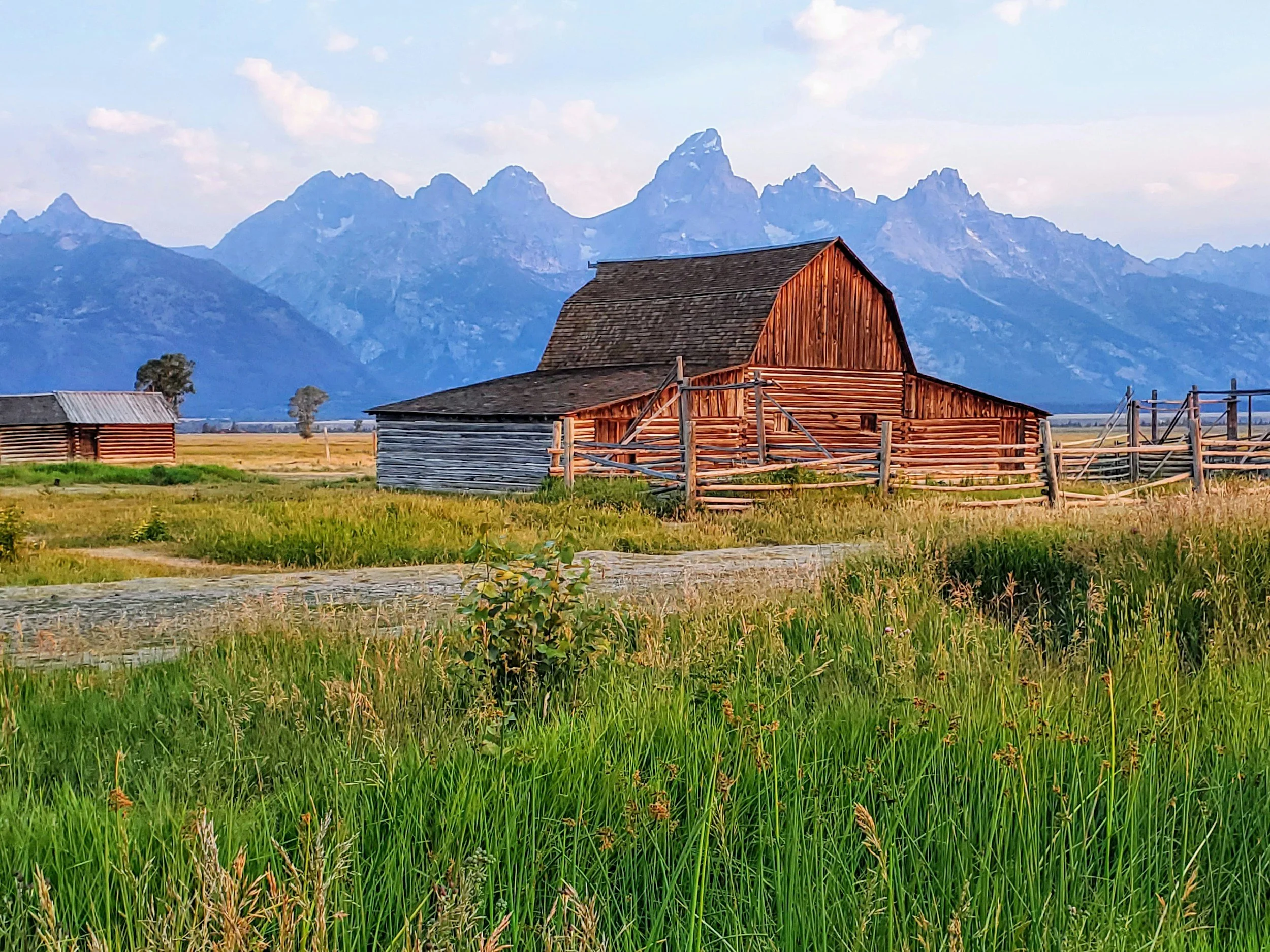
Mormon Row
Must-See Stops in Yellowstone
Spend at least 3 days exploring these sites.
-
This first major stop just inside the North Entrance features huge white and orange travertine terraces and elk are often hanging out on the lawns by the historic buildings. Walk the Lower Terraces boardwalk.
Parking is tight even in a car outside of early morning and evening, and RV space is limited. Upper Terrace Drive is closed to RVs, trailers, and buses.
-
Head northeast to this 40-mile long river valley where bison move in big herds and wolf watchers set up spotting scopes before sunrise. Elk, pronghorn, and grizzlies often turn up too.
Roadside pullouts are the only legal place to stop and most will take a motorhome when they're not already full, so drive slowly and take any pullout that opens up, rather than aiming for a specific viewpoint.
Tower Fall on the way back south is worth a look if you’re in a smaller RV — its parking lot is a frustrating one for a big rig.
-
The Yellowstone River cuts a canyon about 1,000 feet deep here, with the 308-foot Lower Falls at its start. Stop at the Artist Point viewpoint to see the length of the canyon, plus the waterfall.
Stick to the South Rim in an RV. The Upper Falls View Point lot is large and Artist Point is one of the friendlier lots in the park for a big vehicle.
The North Rim Drive is one-way with the tightest parking in the area, and its marked RV spaces are usually taken by cars. Canyon Village Visitor Center has easy parking if you'd rather leave the rig and walk.
-
Just south of Canyon, this is Yellowstone’s other great wildlife corridor (like Lamar Valley), with bison herds on the river flats and grizzlies grazing along the tree line at dawn and dusk.
Use the same approach as Lamar: go at a slow speed and take available signed pullouts only, parking fully off the pavement.
-
Hot springs steam at the edge of Yellowstone Lake here, and a short flat boardwalk loop runs right along the shoreline.
There’s plenty of RV parking, and West Thumb makes a natural lunch stop between the canyon and the upcoming geyser basins.
-
This world-famous geyser area has the easiest parking for RVs in Yellowstone. Predicted eruption times are posted at the Visitor Center and fall roughly 90 minutes apart, so there's time to have lunch in the RV and walk over when the crowd starts gathering.
The Old Faithful area has several large lots and RV travelers regularly report parking a 28-foot Class C here in July without circling once. The lot to the right of the Old Faithful General Store is the one most large rigs use.
Don't leave right after the eruption, when several hundred people head for their vehicles at the same moment. Walk the boardwalk loop past Castle Geyser, Grand Geyser, and Morning Glory Pool. The lot will have thinned by the time you're back.
Black Sand Basin and Biscuit Basin are a few minutes’ drive north with shorter boardwalks and a fraction of the crowd.
-
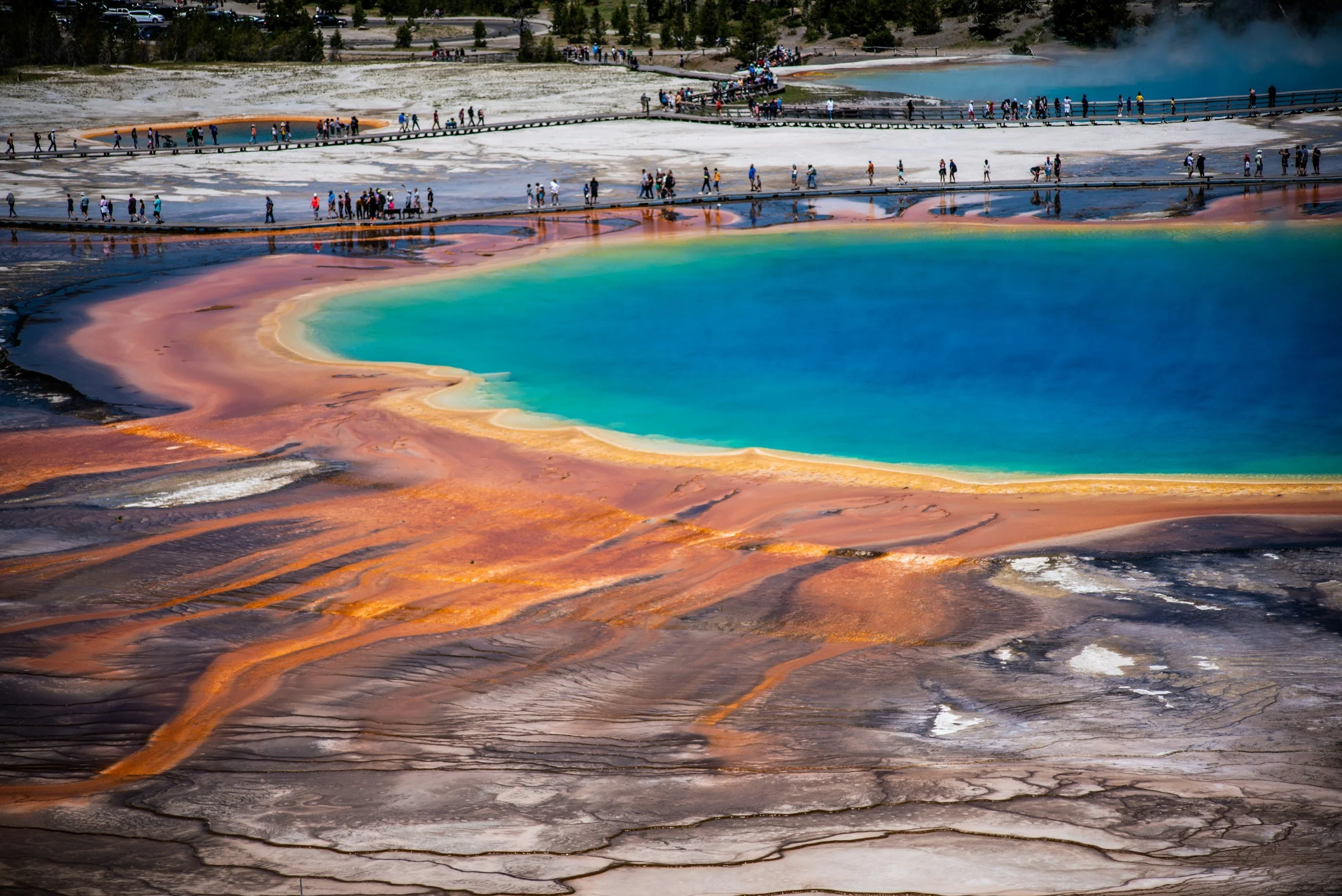
This largest hot spring in the United States is ringed in bands of orange, yellow, and blue, and it's a picture most visitors have seen before they arrive.
Grand Prismatic has the hardest parking in Yellowstone. The Midway Geyser Basin lot is small and has been overflowing through the middle of the day for several summers running, with cars spilling onto the entrance road.
Instead, most RV travelers use the Fairy Falls trailhead a mile south, then take a mile-long trail to the overlook above the spring, where you see the full circle of color rather than an eye-level view through steam.
The Fairy Falls lot fills by midday too, so come early in the morning or late in the afternoon.
-
Take the half-mile boardwalk to see all four kinds of thermal features in one stop: geysers, hot springs, mudpots, and fumaroles.
There's a large lot with dedicated RV spaces and easy parking for big rigs. It's also the last basin before Madison Junction and the West Entrance.
Two scenic side roads nearby are closed to RVs: Firehole Canyon Drive and Firehole Lake Drive, both are narrow and one of them is one-way.
-
This is the hottest and oldest thermal area in Yellowstone. Steamboat Geyser here is the tallest active geyser in the world, though nobody can predict when it will erupt.
Take the Porcelain Basin loop for open views across the steam, or the Back Basin loop for a longer walk through the trees.
RV parking is limited and the larger spaces are often taken by cars at midday, so come early or late.
What to See in Grand Teton National Park
Grand Teton covers a fraction of Yellowstone’s ground, and the 42-mile park loop connects most of the highlights, so two days goes further here than it sounds.
These stops run north to south, in the order you’ll reach them driving down from Yellowstone’s South Entrance.
What to See in Grand Teton National Park
Grand Teton covers a fraction of Yellowstone’s ground, and the 42-mile park loop connects most of the highlights, so two days goes further here than it sounds.
These stops run north to south, in the order you’ll reach them driving down from Yellowstone’s South Entrance.
Grand Teton Highlights
Lakeshore Trail
Snake River Overlook
Jenny Lake
Mormon Row
Must-See Stops in Grand Teton
Spend at least 2 days exploring these sites.
-
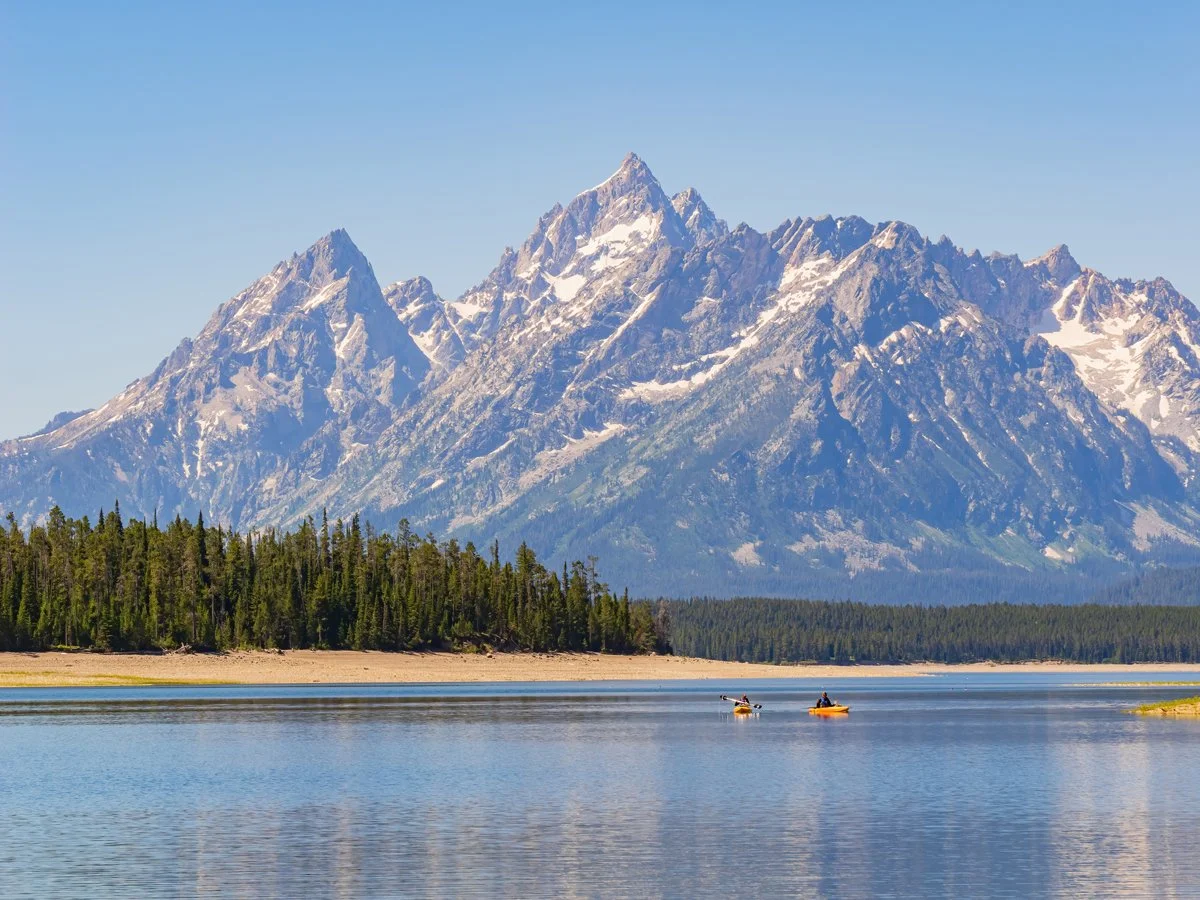
Jackson Lake fills the northern third of the park with the Teton range rising behind it. Colter Bay has a visitor center, marina, and general store, all within walking distance once you've parked. Walk the Colter Bay Lakeshore Trail, a flat 2-mile loop along the water with the Tetons across the lake the whole way and a pebbly beach partway around for a picnic.
There’s plenty of RV parking here. The main lot holds 378 spaces including 68 oversized spots for RVs, boats, and buses, and the wait is usually short.
-
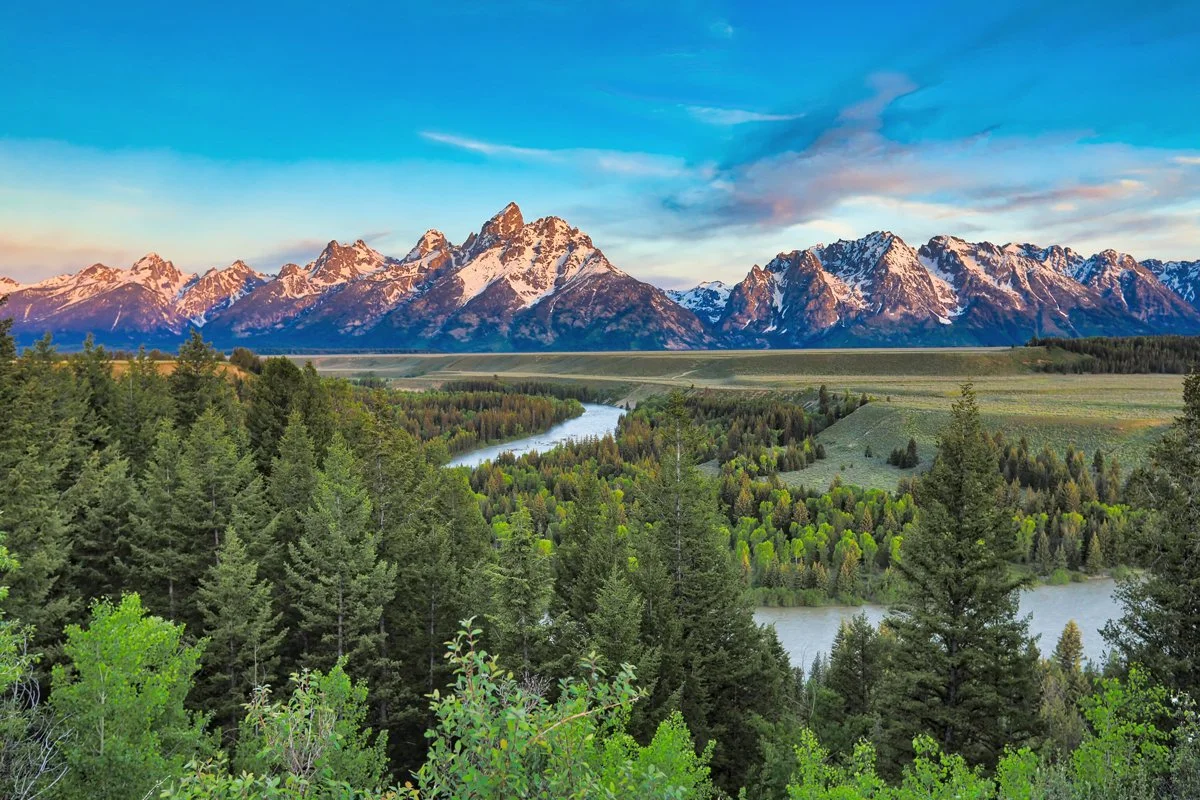
Stop here for the view of Mount Moran reflected in a slow curve of the Snake River, a mile east of Jackson Lake Junction. Come at sunrise when the water is calm and moose, otters, herons, and pelicans work the shallows.
The paved pullout is small and fills quickly, with overflow parking along the road. Traffic backs up whenever a moose appears, so earlier is better.
-
Ansel Adams photographed the Teton Range from this spot on Highway 89 in 1942, and the view still holds up. There's no trail and no walking involved, which makes it the easiest stop in the park to fit into a driving day.
Parking is generous here and works for the largest rigs in the fleet. There are no restrooms.
-
Stop on the southeast shore of Jackson Lake for a general store with gas, three restaurants, a gift shop, coin-operated showers, and a laundromat, plus a rocky beach popular with kids.
Rent a kayak, canoe, or motorboat at the marina, or book a guided fishing trip on Jackson Lake or a scenic float down the Snake River at the front desk. The lodge runs mid-May through mid-October, and the marina closes earlier, around mid-September.
Trailers and RVs are prohibited on the Signal Mountain Summit Road behind the lodge, so the summit views are one part of this stop you'll miss in a rig.
-
Swim at String Lake, which is shallow and slow enough to warm up in summer, unusual for water at this elevation. Watch the wetlands around it for moose, which are more reliable here than almost anywhere else in the park.
The lot commonly fills in mid-summer, and the Park Service advises arriving before 9 a.m. to be sure of a spot.
-
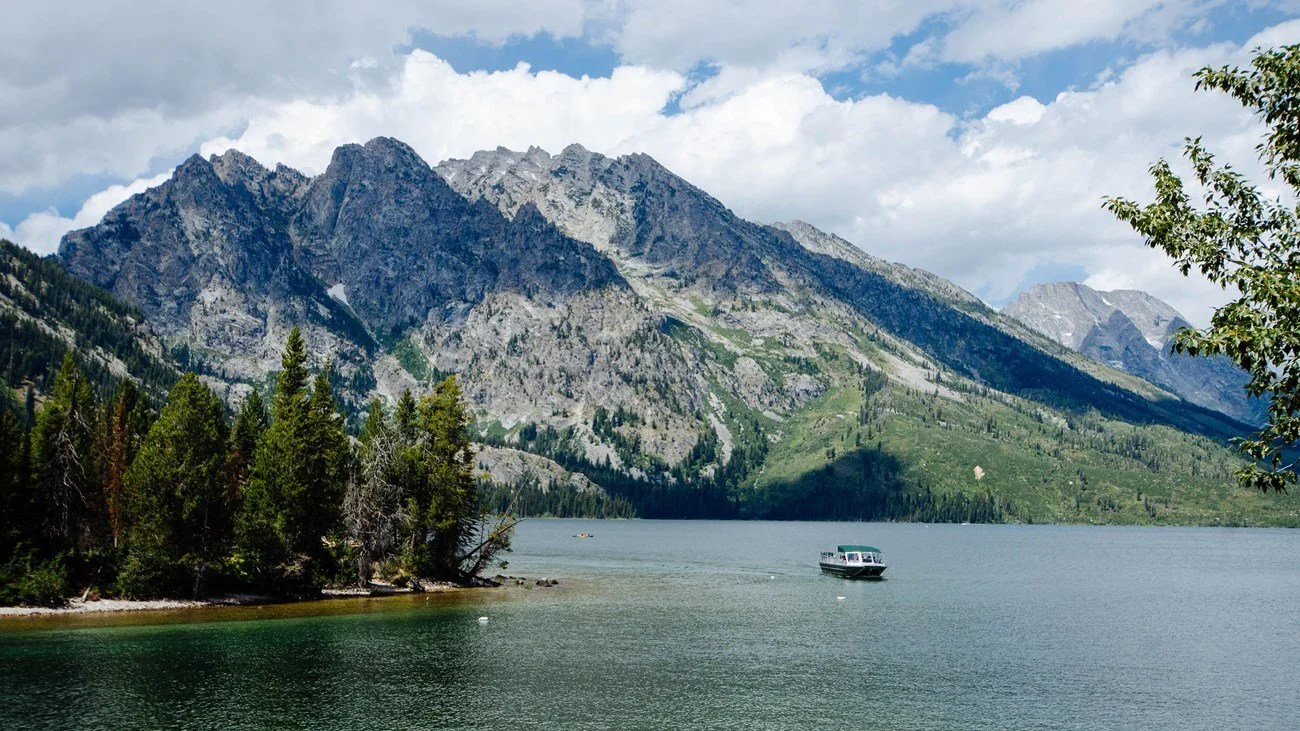
Take the shuttle boat across the lake to the trailhead for Hidden Falls and Inspiration Point, then keep climbing into Cascade Canyon between the peaks. Skipping the boat adds a flat two miles around the south shore.
This is the hardest place in Grand Teton to park a motorhome. The lot holds 414 spaces and only nine of them are RV-only, with long waits at peak. Get here early or plan to come back.
-
Hike 3 to 4 miles round trip from Teton Park Road to a glacial lake at the base of the range, one of the shorter routes that puts you right under the peaks.
The trailhead lot is a good size and takes RVs outside the middle of the day, though it fills by late morning in summer.
-
Walk out to the weathered Moulton barns standing against the full range, the view that turns up on most Wyoming postcards. It's on the east side of the park near Moose Junction.
The pullout is gravel and suits smaller RVs. The road is dirt with a 25 mph limit and gets slow when it's muddy.
Three Itineraries from Bozeman
These routes cover most 7–10 day itineraries. For a detailed day-by-day version, see our seven-day Yellowstone and Grand Teton itinerary.
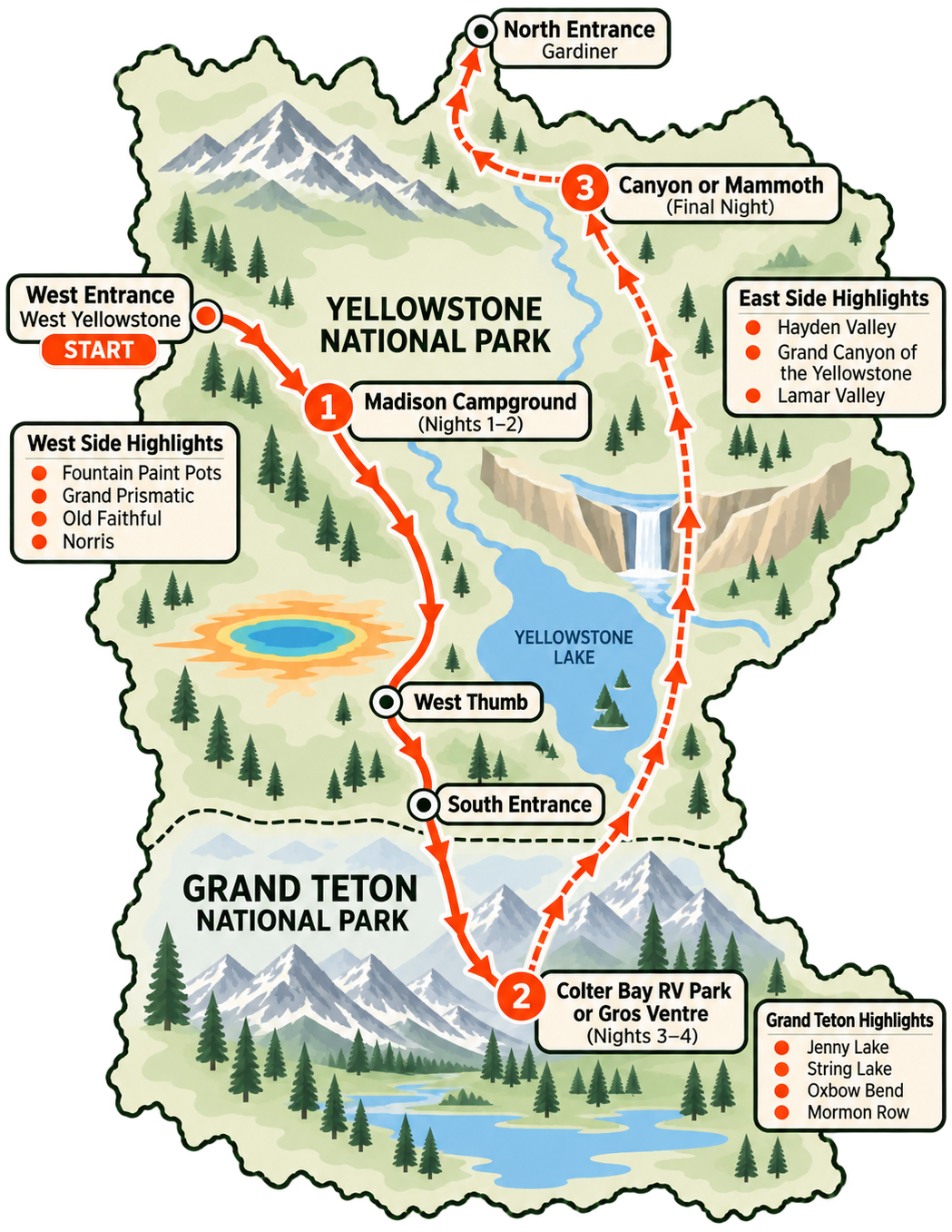
Yellowstone’s West Entrance to Grand Teton
Drive 90 miles from Bozeman through Gallatin Canyon to West Yellowstone, Montana, and the West Entrance. From there, you'll make a full circle south through the geyser basins, into Grand Teton, then north up Yellowstone's east side to exit at Gardiner. You won't drive the same road twice.
Spend nights one and two at Madison Campground, 14 miles inside the entrance. Fountain Paint Pots, Grand Prismatic, Old Faithful, and Norris all sit within about half an hour, so you can catch an eruption in the morning and be back at your campsite for lunch.
Then drive south past West Thumb and out the South Entrance into Grand Teton. Book nights three and four at Colter Bay RV Park or Gros Ventre to reach Jenny Lake, String Lake, Oxbow Bend, and Mormon Row.
Head back north up Yellowstone's east side for Hayden Valley, the Grand Canyon of the Yellowstone, and Lamar Valley. Stay your last night at Canyon or Mammoth, then exit at Gardiner and drive the 80 miles home.
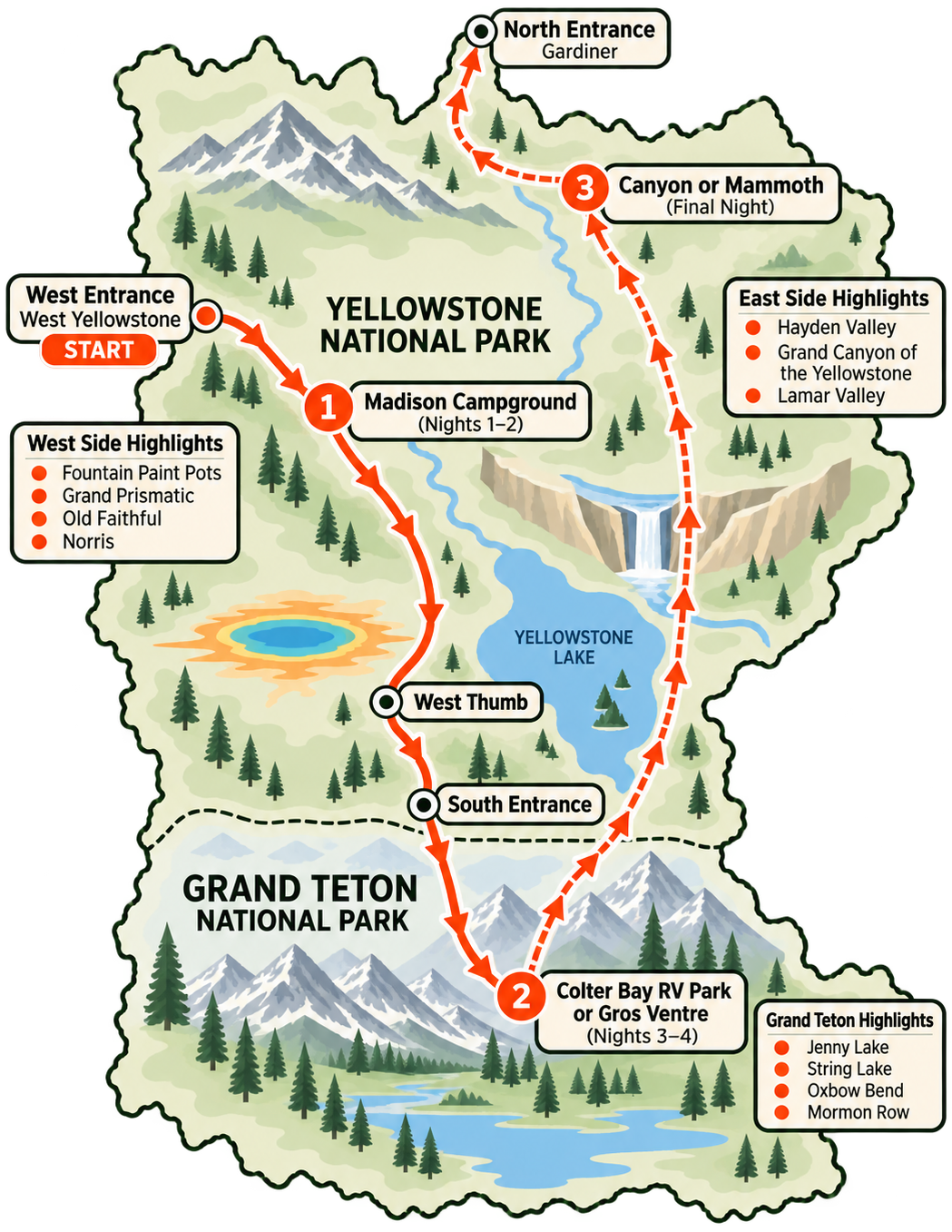
Yellowstone’s North Entrance to Grand Teton
Head 80 miles to Gardiner, Montana, to the North Entrance. From there, you’ll drive south through Yellowstone and into Grand Teton, then return north on the same route. You’ll see wildlife valleys first and geyser basins later.
Spend nights one and two at Mammoth Campground for easy boardwalk strolls from your campsite and Lamar Valley one hour east. Park at a pullout by sunrise when the wolf watchers set up their scopes. Book nights three and four at Canyon Campground to cover the Grand Canyon of the Yellowstone and Artist Point, with Hayden Valley just south for a second round of bison herds.
Then drive south to Grant Village or Madison for Old Faithful, Grand Prismatic, and the rest of the geyser basins. You’ll exit through Yellowstone’s South Entrance into Grand Teton for two nights at Colter Bay RV Park or Gros Ventre. Jenny Lake, String Lake, and Oxbow Bend are all within about half an hour of either campground.
The drive home runs back north through Yellowstone, roughly five hours from Jackson. Most renters break it with a final night in the park.
Yellowstone-Only Trip
Drive 90 miles from Bozemanan to the West Entrance along the Gallatin River, past Big Sky, MT and through West Yellowstone. Cover Yellowstone's Grand Loop figure eight from two campgrounds in five to six days. You'll only have to unpack twice.
Spend the first three nights at Madison Campground, 14 miles inside the entrance. Fountain Paint Pots, Grand Prismatic, Old Faithful, and Norris are all short drives from the junction, and Madison's 60-foot cap fits every rig in the fleet.
Book nights four and five at Canyon or Mammoth Campgrounds for the north. You'll see the Grand Canyon of the Yellowstone and Artist Point, plus Hayden Valley and Lamar Valley for wildlife at either end of the day, plus the Mammoth terraces. On a five-day trip, drop one night at Madison.
Exit through the North Entrance at Gardiner and you’re an easy 80 miles from Bozeman.

Start Planning Your Yellowstone/Grand Teton Adventure
Enjoy all the comforts of home with your own bathroom, kitchen, and sleeping areas. Kids love fun pop-top and overhead bunks, parents love grabbing lunch out of a refrigerator instead of waiting in long lines, and everyone loves being together in their own space during downtimes.