
How Do RVs Get Power?
It’s easier than you think, from three simple sources.
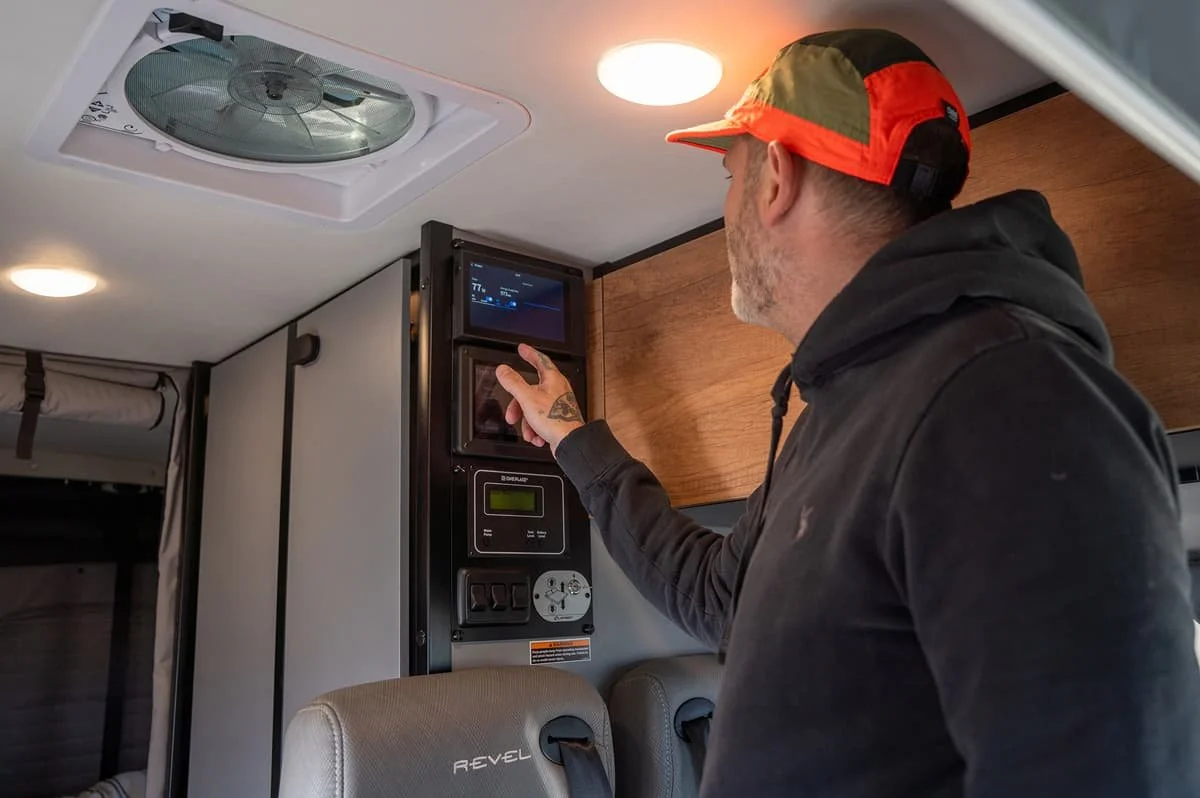
Want to rent an RV but worried the electrical system is too complicated? No need to stress: if you’ve ever plugged in your phone and switched a light on, you have all the skills you need!
The real question isn’t whether you can figure out RV power, it’s where you plan to stay each night: at a campground with full hookups? Off a dirt road in the forest? A combination of both?
Blacksford tip: Plan your first night off-grid to see how little power you actually use, a full hookup site for your second night, then a mix of both for the rest of your trip.
Here’s how the three power sources work, how to plug in at campgrounds, and what to do if something goes wrong.
Three Power Sources, One Easy System
RVs use three ways to power all systems: batteries for basic electricity, an electrical cord for campground hookups, and a generator or solar panels when you’re not hooked up and need bigger appliances. That’s it.
Once you understand what each one does, the rest is just knowing which button to push.
Batteries (12V)
Keep essentials running without being plugged in – things like lights, the water pump, fans, and phone chargers. Think of this as your RV’s “essentials only” mode.
You won’t have all the comforts of home, but you’ll have the basics covered for 24-48 hours before needing to recharge.
Shore Power (Campground Hookups)
Plug into a campground outlet (reserve campsites with electric hookups – full hookups mean water too) and you can use any appliance: air conditioning, microwave, coffee maker, hair dryer, etc.
Be sure to use one big appliance at a time. RVs run on 30-amp or 50-amp service, so the microwave and AC running simultaneously might trip the breaker.
This is your “I don't want to think about battery/generator levels” option.
Generator or Solar (on Certain RVs)
These systems are backup power when you’re not plugged in, but need more than battery power. You can run your AC in the desert, make coffee at a remote trailhead, or charge devices between campsites.
This is your '“extended off-grid” option, just respect campground quiet hours (usually 10pm–8am).
Quick Campground Hookup Process
Plugging in at a campground is simpler than backing into the site:
Park your RV
Locate the power pedestal (usually 10-20 feet from your site)
Make sure the pedestal breaker is OFF
Plug in your RV cord (you'll hear a click when the converter detects power)
Flip the pedestal breaker ON
That’s it. If nothing happens, check that the pedestal breaker is fully on and your RV's main breaker (inside) isn’t tripped.
How to Make Your Power Last
Without hookups: Drive 1-2 hours daily to recharge the RV’s batteries. If your RV has a generator and AC, run it in the afternoon, not overnight. Use propane for cooking and park in the sun if you have solar.
With hookups: Use one major appliance at a time. Hair dryers pull heavy power, use sparingly.
Always: Park in the shade to stay cooler. Open vents before running AC. Set thermostat moderately.
Power Issues to Watch For
Battery level drops below 50%: Recharge by driving for 1–2 hours, running the generator, or plugging into shore power at your next campsite.
Power suddenly cuts out: Check the campground pedestal breaker first, then your RV’s interior breaker panel. If it keeps happening, avoid running multiple big appliances at the same time.
Generator won’t start: It might already be running (check the exterior switch) or need the fuel type switched between propane and gas. Your rental walk-through should cover how to operate your specific model.
No click when plugging in: The pedestal might be dead. Notify campground staff and they’ll either reset it or move you to a working site.
Blacksford Makes RV Power Easy
Every Blacksford rental includes a complete electrical system walk-through before you leave, plus 24/7 support if questions come up on the road.
Browse Blacksford’s fleet and book an RV rental that fits your trip, whether you're boondocking in the desert, camping at national parks, or relaxing at luxury RV resorts.